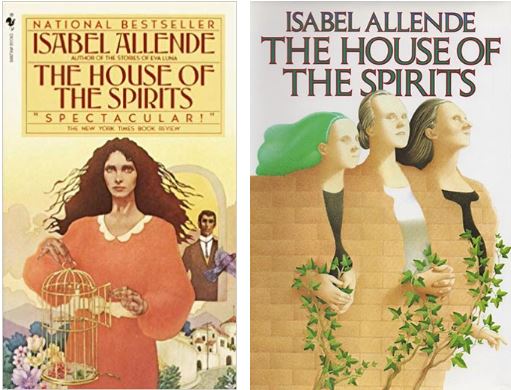
La casa de los espíritus (The House of the Spirits) is an epic family saga that spans several generations. The novel chronicles the political aspirations, forbidden romances and acts of violence committed by and against the Del Valle and Trueba families during a tumultuous era of Chile’s history. It is both a romance and political commentary, inspired by the author’s own experiences; a love letter to her family, whose fate is entwined in the land and the history of their country. The House of the Spirits is a captivating and enchanting tale of sorrow, blood, and love.
a world of terrifying stories and calm silences
The House of the Spirits was a strange house with a maze of rooms, twisted staircases that led to empty spaces, of turrets, doors hanging in midair, crooked hallways, and portholes. A house for secret trysts and clandestine affairs. The many rooms proved necessary, to house the outcasts, hide the outlaws, and provide refuge in the days of turmoil and strife. The rooms were always nearly filled, the table was always set with one extra place for anyone who might arrive unannounced, and the main door remained permanently open. There, people would gather to commune with spirits, consult with family portraits, and objects were known to float around the room. It was a house populated with eccentrics. The ostentatious, pompous house of the Trueba family looked impressive on the outside, but the inside held many secrets.
Here the madness was divided up equally and there was nothing leftover for us to have our own lunatic.
Allende tells us the story through the voices of Alba and her grandfather, Esteban Trueba. Alba introduces us right away to her grandmother, Clara Del Valle, as a little girl, when a tragedy occurs which causes a chain of events, the first of many acts of violence in the history of the family. The story unfolds more organically, rather than in a direct linear narrative. When certain characters arrive, the story reaches back in time to reveal their histories and then loops back to the present moment. At times, the narrators allude to coming events they haven’t revealed just yet. The story makes it way through the generations, changing perspective as the events unfold. The two voices both contrast and support each other; the flowing, gentle narrative of Alba is often interrupted by her stern grandfather. Esteban was a disruptive force, and his presence always broke the harmony established by his family when he was away. Its quite fitting that his first-person narratives also feel like this, like they are breaking the harmonious flow of the story.
Magic, like cooking and religion, was a particularly feminine affair
Allende infuses the story with magical and spiritual elements. Every magical element acts as a metaphor and a mirror. There are prophecies, a curse, obsession. Revenge. Justice. Magic. Moments of extreme violence and gentle beauty. Sensuality and love are explored in all its forms. The beginning felt whimsical and dreamy in stark contrast to the ending chapters, where it feels more gritty and there is war and upheaval. The time of the spirits, as Alba refers to it, is a more magical time when her grandmother Clara was still alive and her presence brought a gentleness and quietness to the house, a refuge among the nightmares. The violence, however is throughout. It’s quite startling how violent even the childhood memories can be. But mostly the book explores the idea of fate and consequences, and forgiveness. Violence can tear families apart and can be felt and manifests itself generations later. Memory is fragile. Life is short. People don’t live long enough to see the consequences of their actions through the generations. Clara had the gift of clairvoyance. She could see her family was marked for tragedy. Instead of seeking vengeance, she raised her children to survive the coming ordeals. Some manage to escape the horrible fate, others, like Alba are forced to endure many trials and tests of will. Everything is balanced in the end. Curses can be broken and small acts of love can break the chains of violence. Alba even mentions this in the epilogue. She has no hatred for those who harmed her, because she sees it in the context of a bigger story, how her grandfather’s actions as a young man can have effects even to her present day.
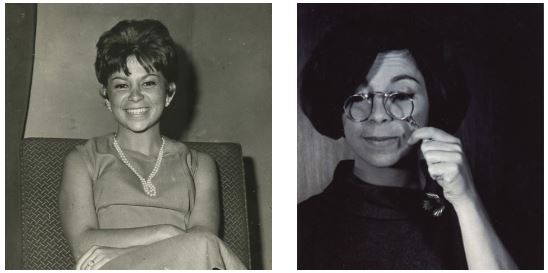
La casa de los espíritus (The House of the Spirits) is Isabel Allende’s first book and became an instant best-seller when published in Barcelona in 1982. Allende was a daughter of Chilean diplomats and her personal life mirrors that of her characters in her book. She was raised by her mother and grandparents in Santiago, Chile. The political elements of the book are based on true events that took place in Chile. Following the 1973 overthrow of Salvador Allende, Chile’s president and Isabel’s cousin, she lived in exile in Venezuela for the next 13 years. It was from her Caracas exile that she began writing a “spiritual letter” to her dying grandfather, which eventually became The House of the Spirits. Allende wrote two more books, Hija de la fortuna(Daughter of Fortune) in 1998 and Retrato en sepia (Portrait in Sepia) in 2001 that complement each other as a trilogy, yet which can be read independently.
My most significant achievements are not my books,
but the love I share with a few people—especially my family—
and the ways in which I have tried to help others.
 aspen mitchell